
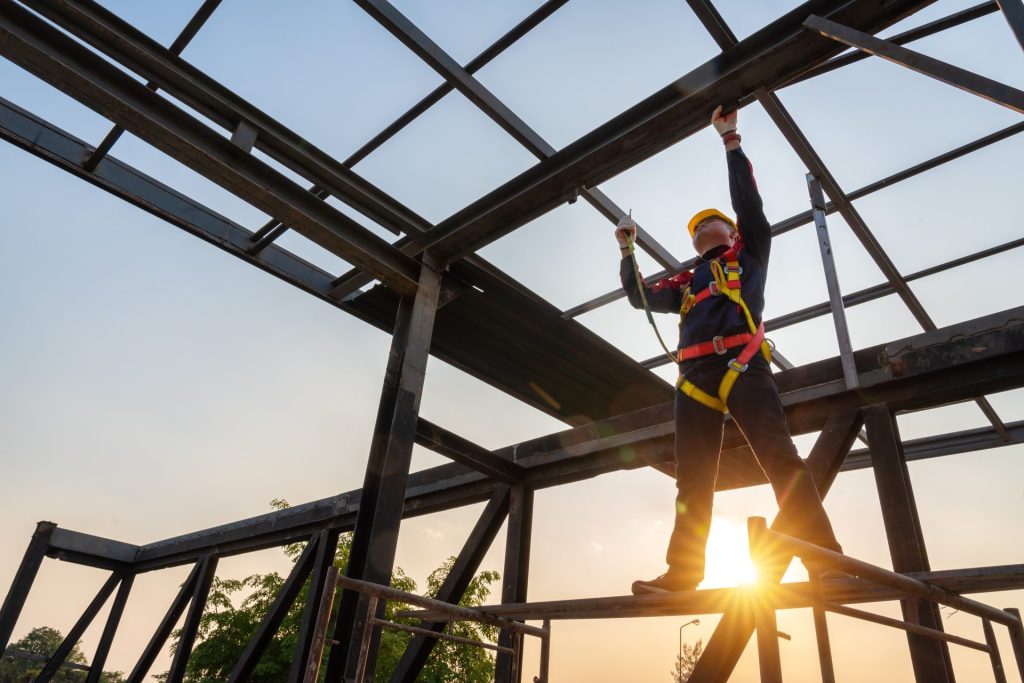
What is rope access?
Rope access uses specialist rigging and trained operatives to reach height and confined areas without the need for temporary structures. Operatives are suspended using a system of ropes and harnesses, working to strict IRATA standards to carry out inspections, maintenance, repairs and installations safely and efficiently.
What is scaffolding?
Scaffolding involves erecting a temporary structure of tubes, boards and fittings around or alongside a building to provide a stable working platform. It is a familiar solution for sustained work over large areas, but comes with significant setup time, cost and footprint.
How do they compare?
Cost
Scaffolding carries substantial costs for materials, labour, delivery, erection and dismantling - often running into thousands of pounds before any actual work begins. Rope access eliminates the need for a temporary structure entirely, meaning you pay for the work, not the access method.
Speed
A rope access team can typically mobilise within days and be working the same day they arrive on site. Scaffolding can take days or weeks to design, deliver and erect - and the same again to strike. For time-sensitive projects, rope access is significantly faster.
Disruption
Scaffolding can block entrances, obstruct business operations and affect neighbouring properties. Rope access has a minimal footprint - operatives and equipment arrive in a van, work quietly above ground level and leave without trace.
Access
Some locations simply cannot accommodate scaffolding - restricted urban sites, complex structures, listed buildings or areas where a scaffold would itself be hazardous. Rope access can reach areas that no temporary structure could serve.
Suitability for sustained work
For large-scale projects requiring a permanent working platform over an extended period - a full building refurbishment, for example - scaffolding may still be the right answer. Rope access is best suited to targeted, defined tasks rather than open-ended programmes of work.
Which should you choose?
If your project involves inspections, surveys, repairs, maintenance, cleaning or targeted installations, rope access is almost certainly faster, cheaper and less disruptive than scaffolding. If you are undertaking a large-scale refurbishment requiring sustained platform access across a wide area, scaffolding may be more appropriate - though a combined approach is often possible.
The best way to find out is to talk to an experienced contractor who can assess your specific requirements.
Talk to Prime Access
Prime Access are IRATA certified rope access contractors with 17+ years of experience working across commercial, industrial and public sector sites throughout the UK. Based in the South West, we work nationwide.
Get in touch today to discuss your project.